
How to prevent false declines in travel

Imagine a customer spends an hour carefully planning a £2,000 summer holiday. After looking for the perfect hotel, flights, and transfers, they finally enter their card details, click confirm, only to be met with a generic ‘payment declined’ message.
In this scenario, the cardholder has more than enough funds and a flawless credit history. The card issuer, however, flagged the transaction as 'unusual' because of its size or the merchant's location. This is a false decline, and it is costing travel companies more than actual fraud. Research suggests that false declines account for roughly 5.5% of annual revenue , a figure that is often far higher than losses attributed to criminal fraud.
This post explores why the travel sector is uniquely vulnerable to these authorisation failures and outlines the strategies merchants can use to reclaim legitimate revenue while maintaining robust security.
What are false declines, and why should travel merchants care?
A false decline, also known as a false positive or 'over-blocking,' occurs when a legitimate transaction is incorrectly flagged as fraudulent and rejected by a payment processor or issuing bank. The irony is that the security measures designed to protect a business are often the very things driving customers away.
The financial impact is staggering. For a travel company with a £100m annual turnover, a 5.5% false decline rate represents £5.5m in lost revenue every single year. These losses aren't just one-off events; they cause long-term damage to the customer relationship.
In an industry where customer acquisition costs are high, losing a hard-won customer at the final hurdle is an expensive failure.
Why travel bookings trigger declines more than other industries
False declines aren't random; they are usually the result of overzealous fraud filters reacting to specific 'red flags' inherent to travel. The most common reasons include:
1. High transaction value
Travel bookings often involve large sums. Banks and fraud filters are naturally more aggressive with high-ticket items. If a purchase significantly exceeds the customer’s typical daily spending or the merchant's average order value, it often triggers an automatic block.
2. Geographical red flags
Travel is inherently cross-border, which is a massive trigger for fraud systems.

3. Inconsistent data (AVS and CVV mismatches)
Small errors in the checkout process often lead to immediate declines.
4. Technical and authentication hurdles
With different authentication protocols in different jurisdictions, and user privacy driving the use of VPNs to browse the internet, technical issues can also result in declines.
5. Unusual booking patterns
Algorithms look for 'high-velocity' behaviour in transaction processing. Common triggers include:
The false decline vs fraud trade-off
Merchants often face a security dilemma: tightening fraud rules reduces chargebacks but inevitably increases false declines.
Banks often over-decline because they are liable for fraud, not for the merchant's lost sales. This incentive structure encourages conservative blocking. Furthermore, many issuers use generic fraud models that are not optimised for the specific patterns of the travel industry, leading to high rates of 'soft declines' that could have been successful with better routing.
How to identify if false declines are hurting your business
The first step to fixing the problem is measurement. You should look for warning signs, such as high decline rates on cards that have available funds or a spike in customer complaints regarding rejected payments.
A critical metric to track is your authorisation rate (approved transactions divided by total attempts). The travel industry benchmark for a healthy rate is typically between 85% and 90%. If your rate is lower, you should segment your data by transaction value, card type, and device type to pinpoint where the leaks are occurring. Calculating your potential revenue loss is simple: multiply your declined transactions by your average booking value and an estimated false decline percentage.
Proven strategies to reduce false declines
To recover lost revenue, merchants must adopt more sophisticated authorisation optimisation techniques.
Payment orchestration and smart routing
Payment orchestration allows you to automatically route transactions across multiple payment processors. If the first processor issues a 'soft decline,' the system can instantly retry the payment through a secondary processor. This cascading logic can recover initially declined transactions without the customer ever knowing there was an issue.
Network tokenization
Replacing sensitive card numbers with network tokens can significantly improve approval rates. Because these tokens are issued by card schemes and carry additional authentication data, banks have higher confidence in the legitimacy of the transaction.
3D Secure 2.0 (SCA)
Strong Customer Authentication (SCA) is now a requirement, but it can also be a tool for recovery. Using biometric authentication like Face ID or fingerprints proves the cardholder's identity to the issuer, reducing fraud concerns and lowering the likelihood of a false decline.
Account updater services
For advance bookings, a customer's card might expire between the time of the initial deposit and the final payment. Account updater services automatically refresh expired card details behind the scenes, preventing unnecessary declines when the final balance is due.
Alternative Payment Methods (APMs)
Digital wallets like Apple Pay, Google Pay, and Click to Pay have higher approval rates because they are pre-authenticated by the device.
Similarly, open banking transfers carry zero decline risk because they move funds directly from account to account, bypassing the complex rules of card issuers entirely.
Building the business case for investment
The ROI on fixing false declines is often immediate. For a merchant processing 10,000 bookings a month with an average value of £1,800, a 3% decline rate where 60% are false positives equals £324,000 in lost monthly revenue. Recovering just a portion of these declined payments could net the business over £1m in additional annual revenue. In most cases, the implementation costs are recouped within the first three months.
False declines are a multi-billion pound leak that the travel industry can no longer afford to ignore. By shifting the focus from 'fraud prevention' to 'revenue optimisation,' travel brands can reclaim legitimate sales and improve the customer experience.
The tools to fix the problems are already available. The first step is to measure your current authorisation rate and calculate exactly how much revenue is being left on the table.
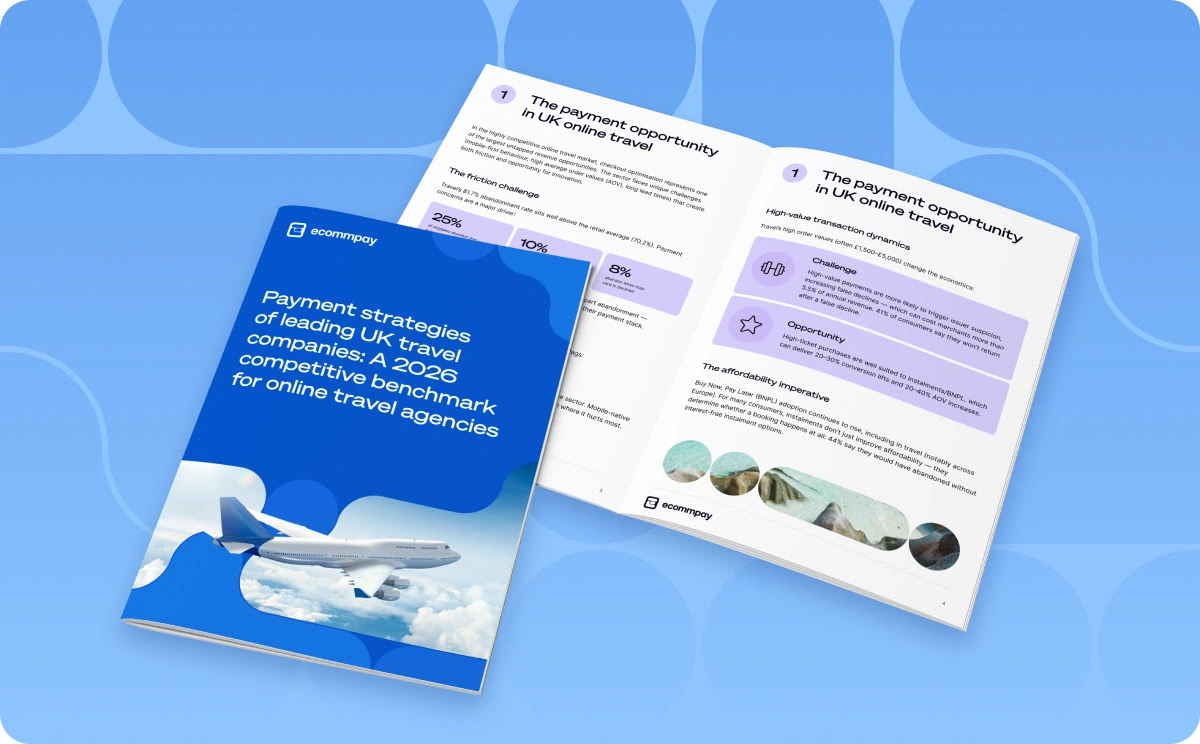
See how leading UK travel companies are tackling false declines and optimising payment infrastructure. Our competitive benchmark reveals complete payment strategies, with advice on how to implement winning strategies.