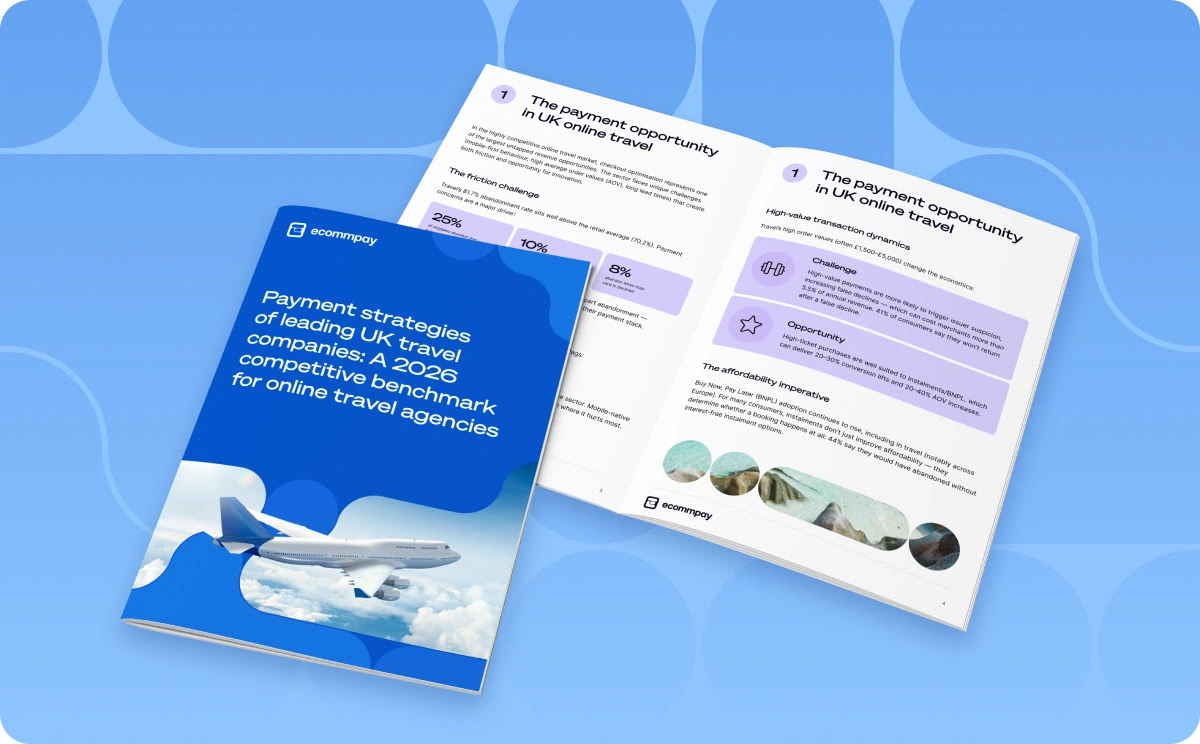

Why does the travel industry have such high cart abandonment rates?

Out of 100 customers who start booking a holiday, only 18 complete the purchase. This is the stark reality of the travel industry's digital checkout experience.
While the wider e-commerce sector grapples with an average cart abandonment rate of 70.2%, online travel agencies (OTAs) and tour operators face a significantly steeper mountain: a staggering 82% abandonment rate .
For the UK travel market, this represents roughly £16.5bn in addressable revenue being left on the table every year. When four out of every five potential bookings vanish before completion, the impact is profound.
This post explores the reasons behind high abandonment rates, from the unique psychological pressures of holiday booking to the technical failings of payment infrastructure, and outlines the actionable, technology-driven solutions that can help travel brands reclaim their share of those lost billions.
The cart abandonment crisis in travel
The travel industry is uniquely challenging when it comes to converting browsing into a final booking. Unlike retail, where a customer might impulsively purchase a pair of shoes, travel involves them making more complex financial and emotional commitments.
A typical family holiday often ranges between £1,500 and £5,000, making it one of the largest annual expenditures for a household. This high average order value (AOV) naturally leads to longer consideration cycles. Often, the checkout process is used as a way to ‘save’ a quote while the traveller consults a partner, or checks annual leave.
Furthermore, travel booking flows typically involve a lot of steps. A customer needs to consider dates, room types, flight preferences, seat selections, and insurance add-ons. Each step introduces a new opportunity for friction. Because travel is a less frequent purchase than fashion or groceries, outside of the major players, brand familiarity is often lower, creating concerns around trust.
The cost of failing to overcome these hurdles is twofold: the immediate loss of revenue and the massive waste of marketing budget. Every abandoned cart represents spend on SEO, PPC, and social ads that have failed to deliver a return on investment.
The payment problem: why 43% of abandonment is payment-related
While many factors contribute to a user leaving a site, the moment of payment is the most critical friction point. Research indicates that 43% of travel checkout abandonment is directly related to the payment experience. This can be broken down into three primary psychological and technical barriers.
Firstly, there are customers who abandon their purchase because they do not trust the site with their credit card information. High-value transactions amplify security concerns. A traveller who might risk £30 on an unfamiliar clothing site will hesitate to enter details for a £2,000 booking if the checkout feels insecure. This lack of brand familiarity makes the customer nervous about the security of their funds.
Secondly, some users cite insufficient payment method options as a reason for abandoning a purchase. Customer expectations have evolved rapidly, and they no longer rely solely on Visa or Mastercard. Today’s travellers expect a range of Alternative Payment Methods (APMs), including digital wallets, Buy Now Pay Later (BNPL) options, or even direct bank transfers. International travellers in particular may look for local payment methods they trust. If these are absent, the booking ends abruptly.
Finally, a number of bookings fail when a card is declined. In travel, these are often ‘false declines’, which are legitimate transactions flagged as suspicious because the amount is unusually high or the merchant is located abroad. These failures are devastating. Data shows that 41% of customers will never return to a merchant after a legitimate payment is rejected, likely taking their business to a competitor who can successfully process the transaction.
The mobile conversion disaster
The shift toward mobile browsing has created a significant performance gap. 67.9% of UK travel bookings originate on mobile devices , yet the conversion rate on mobile is a mere 1.4%, compared to 3.9% on desktop . This 2.8x gap suggests that while travellers are happy to research on their phones, the actual checkout experience remains difficult.
Mobile checkout is particularly brutal because of the physical limitations of the device. Manually entering 16-digit card numbers and billing addresses on a small screen is tedious and prone to error. Furthermore, trust concerns are often heightened on mobile, where security signals are less visible. Many users decide to finish the process on a computer later, a transition where the majority of intent is lost. Closing even half of this conversion gap would unlock millions in revenue for the average OTA through specialist travel payment solutions.
Proven strategies to reduce payment-related abandonment
To combat these losses, travel companies must move beyond basic payment processing and adopt a strategic approach to the checkout experience.
Comprehensive digital wallet coverage
Integrating digital wallets like Apple Pay, Google Pay, PayPal, and Click to Pay is no longer optional. With 60% of UK adults now using mobile wallets , these tools eliminate the friction of manual card entry by using pre-stored details and biometric authentication. Beyond convenience, they build trust - a customer might not know your brand well, but they trust Apple or Google to handle the security of the transaction.

Multiple BNPL provider options
Affordability is a major driver of abandonment. 44% of shoppers admit they would abandon a cart if instalment options weren't available . By offering a variety of providers such as Klarna and PayPal Pay in 3, or longer-term financing options like Humm, you cater to different demographic preferences. For bookings over £500, BNPL can drive a 20-30% increase in conversion rates as customers feel more comfortable ‘trading up’ to a better hotel when the cost is spread over several months.
Open banking and pay by bank
Open banking is the fastest-growing payment trend in the UK. For a travel merchant, the benefits are clear. A £2,000 booking can see cost savings of between £24 and £44 compared to traditional card fees. For the customer, it provides a secure bank transfer that requires no card details to be shared, offering instant confirmation.
Payment orchestration to reduce false declines
Medium-to-large OTAs should consider payment orchestration. This technology allows for ‘smart routing’, where a transaction is sent to the processor most likely to approve it. If the first processor declines the card, the system can instantly retry the request with an alternative provider. This simple fail-safe can recover the revenue typically lost to false declines.

High-visibility trust signals
Confidence is the currency of the checkout page. Ensure that SSL certificates are visible and display familiar payment logos prominently. It is also vital to keep refund and cancellation policies visible near the payment area. Providing social proof near the payment button can provide the final nudge of confidence needed to complete the transaction.
Addressing non-payment factors for cart abandonment
While payments are the primary lever for recovery, other site-wide factors contribute to the 82% abandonment rate. Forced account creation is a major deterrent, driving 26% of users away . Providing a guest checkout option is an essential fix.
Transparent pricing is equally important. Unexpected costs, such as luggage fees or local taxes appearing only at the final step, will almost always trigger abandonment.
Finally, ensure that forms use progressive disclosure (only showing essential fields, revealing advanced or optional options only when necessary), and that mobile page load times are optimised to prevent users from losing patience.
How to prioritise your roadmap
Recovering lost bookings requires a phased approach based on ROI and ease of implementation.

High abandonment rates are not an inevitable cost of doing business in travel. It is a solvable technical and psychological challenge. By addressing the 43% of drop-offs caused by payment friction, UK travel brands can move from surviving to thriving.
The leaders in the space are already using wallets, BNPL, and orchestration to recover their portion of the £16.5bn opportunity. The path forward is clear: start by removing the friction from your checkout, and the revenue will follow.
Want to see how leading UK travel companies have tackled this challenge?