Our new podcast episode is here – search for Making payments make sense on Spotify!
Listen now


Acceptance Rates, AI & Global Growth

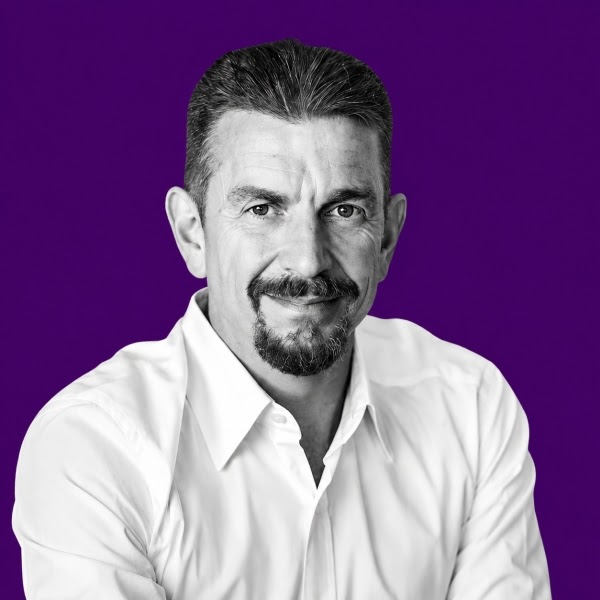
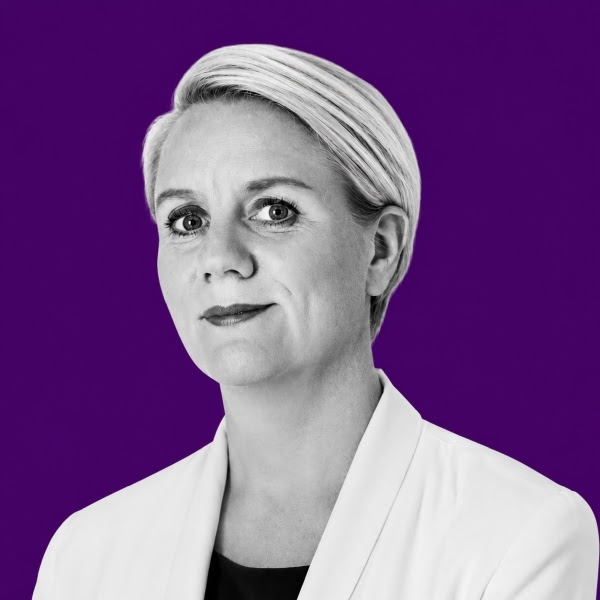
In the first episode of Making payments make sense, Ecommpay founder Aleex Sjarki joins Julia Streets to explore what is really changing in payments.
From acceptance rates and AI to global growth and financial inclusion, the conversation cuts through the complexity to show how payments can become simpler, smarter and more valuable for merchants.
Watch the podcast | Episode 1: Acceptance rates, AI & global growth
Read the episode transcript
Julia Streets:
So hello everybody. I'm Julia Streets, and I'm very excited today because I'm with Aleex Sjarki, who is the founder and the CEO of Ecommpay. Aleex, you're constantly travelling. You're out with customers all the time. We're in your office having a conversation about what we should be focusing on, what we can expect, and that's what we're going to explore today. And just for the benefit of the audience, you've got two major customer groups. One is your medium-sized customers, and the other is your large, huge clients around the world. Tell us what are the big things that they are thinking about today?
Aleex Sjarki:
Welcome Julia. I'm extremely happy to see you again in our office. Please come more often! And yeah, our clients, there is a variety of the things I can speak for hours. But as a core, core, I would say trendy stuff for this year or for the previous period of time, I would mention acceptance rate, because everybody now is fighting for that. And everybody settled with partnerships, with the acquirers or other methods. Everybody already has open banking. Everybody has open banking who wants to have and so on, so on, so on. The rates already are low. So what else can you do with payments? Settlements are done in proper currency. Everything happens. Reconciliation happens perfectly. What else can you do? You can just, just get better result, better affect, out of the acceptance rate, because that's kind of the still area of improvement, a huge area of improvement. And there is a variety of things, what could be done to improve it. And if you speak about acceptance rate, there are kind of a two… one is acceptance rate, its proportion between the client and success after the payment is initiated by the cardholder initially, and the second part, the steps a bit before: it's a conversion from the client, from the through the cashier, through the interfaces of the client, down to the initiation of the payment. Of course, with our interfaces for medium clients, we are helping on this stage as well we are helping quite successfully, and they get much better results because they expected to have that, which is actually one of the reasons they are working with us, and but bigger guys who create all this from their side, they are more keen to see the acceptance rate after the initiation of the payments. And it's quite obvious. There are some payments which always will be successful, there are some payments which always will be unsuccessful, and there is a grey area, and that's where the race could be won…. And that's exactly what we're doing, and we are focusing on that. We have a very good result because we are doing a particular, bespoke deep dive in the analytics of one exact client, and bringing in a particular recipe exactly for that client. And what we can find through this period of time, there is no silver bullet. So basically, there is no like a solution: you've done it and it fixed all across the portfolio. It always should be done. Of course, we are using AI in this area as well, but as a co-pilot together with our experts, not by itself. Because on the particular cases, still, we are seeing perfection of the individual on the AI, exactly in this case. In some other cases, It's the opposite.
Julia Streets:
So let me pick up on a few things then, because there you've talked about the power of data and analytics. You've talked about the opportunity that AI is presenting, but also you've talked about bespoke customer service, and so often AI is being discussed in the form of how we can robotize customer service in so many ways. So it makes me very curious about, what are you focused on, particularly in the business when it comes to AI.
Aleex Sjarki:
The biggest problem for us to work with AI is that, as a regulated company working with a lot of sensitive data, we are not allowed, and we cannot afford ourselves to upload this data to the public cloud. So basically, we cannot use publicly available AI services, and that's why we had a bit of the gatekeeper on the beginning of the story. But we created our own internal AI platform on premise that allows, of course, encrypted, that allow us to work with AI more efficiently nowadays. That was a full big step, because, in my understanding, a lot of people taking AI nowadays irresponsibly. As nuclear energy can give you almost infinite amount of energy if you know how to work with it as it can create nuclear bomb. So it basically depends how you use it. And here, I'm not sure that all the usage of AI, what I see is, let's say, simple, responsible, but yeah, so based on this platform, we are doing a lot of implementation of AI in our daily operations, mostly looking like improvement and copiloting, together with existing talents we have in the company. Some fixes here, some fixes there. So basically we use it for chargeback processing, for onboarding, for review, for monitoring, for support, almost in all areas of the company. I mean, it's easier to name where we are not using AI nowadays, but it's not like a self sufficient machine which is just working by itself and so on, it's mostly coming together with a human.
Julia Streets:
Right, so it's important to hear about the kind of… because I do feel like we're paddling in the shallow end of AI, and hearing you talk about the very clear commercial gains that you can achieve through using AI within the organisation.
When we think about your clients and your customers, and I talk there about very bespoke customer service, can you share some insights into how your customers are thinking about AI and what they're almost demanding of you?
Aleex Sjarki:
Yeah, sure and Julia we're not using actually AI directly to our clients, because we believe, okay, we can give it as analytics on our dashboard and so on, but we are not… we still believe that human bespoke service is better at our days just because of the personal contact and the depth of the dive in the problematics of our client, because our client is an entity, it's merchant, but it contains proper humans, and you interact as a human to human so you're not interact as far as our merchants will become completely AI driven we will be definitely ready to support them, completely AI driven based. But as far as we're interacting with the humans, we are trying to keep this part and it virtually feels like our competitive advantage. So working with us you're working with humans. They have a face, they can speak with you, they have their problems, they have their mistakes, and they have their own successes as well, and that's giving more personalised touch to the services of Ecommpay. But at the same time, we are using AI, as I would name as a skeleton for experts and talents, boosting them with a huge amount of different analytics and the ways how they… so basically AI create a lot of input for our client, but it comes through the prism of expertise of our individuals, and we're not just spreading out the results of AI operations on our merchants without pre-moderation or without re-factoring through the human understanding of the things.
Julia Streets:
And, we've talked on other occasions about your kind of obsession with domain understanding, and we talked about your highly bespoke customer services. And so they're thinking about the intelligence and the power that the AI, and I love the way you refer to it, kind of like a copilot, which is interesting, I'm really curious to hear your thoughts about what you think we might be talking about were I to come back in December 2026.
Aleex Sjarki:
I think, I think, first of all, definitely, we'll speak about AI, because everybody's speaking about AI, and this bubble wouldn't blow up so quickly, or we will speak positively about it or negatively about that. It depends how we will spend the year, but same time, yes, one of the topics, bigger implementation, wider spread out, more complicated and more efficient models and so on, so on, so on and it's wider usage in the payment industry, generally, in a lot of areas, a lot of areas. And, of course, genetic AI, how AI can pay something for you. Again here, from my point of view, it should be extremely responsible, because irresponsible AI agents can bring you much more harm. They then irresponsible payday loan, but that's something, what we will come later on, after some time.
Julia Streets:
Well, I wanted to ask you, actually, while I'm here, which is when we think about agentic commerce. A lot of people are talking about it, a lot of people are doing things in it, but there are risks and there are opportunities. Your thoughts on each.
Aleex Sjarki:
Yeah, for sure, it's extremely powerful tool and and I'm passionate about that, so I've been trying to use a lot of AI in my daily operations. But at the same time, in my understanding it's… you need to understand quite precisely what you do and how you do it and you cannot just rely on the numbers going out of there. You need to be more responsible in the way, how you use it. As far there is a joke as far as everybody in each of the room, in each of the office from all the media channels speaking about usage of AI, implementation of AI, the output of AI and the friendship with AI somewhere in the depths of the cloud sitting, Skynet, and waiting for all its to happen.
Julia Streets:
Okay, so the benefit of those who have no idea what Skynet is please expand!
Aleex Sjarki:
As maybe you saw some sometime in the past there was a movie Terminator. This is Arnold Schwarzenegger, the AI system which launched nukes to finish the land was Skynet, so basically, and this was done by AI. So who knows? I definitely hope it would not happen, but still, it was done by AI. So that's what I'm trying to tell them. It's not just about AI. Basically, everything in your life you need to use responsibly. From, I don't know law, car, matches, anything. And that’s the same instrument. And if you will use it responsibly, you can get, you can get to the results you don't want to have. And that's something that we will see more and more through the next year. It's not about the payments generically, but in our understanding everything what we are doing, we are doing with triple checks and acknowledgement that you need to see on this mirror from both sides, not just from the mirroring side, but from the transparent side as well. And if you use it, in my understanding, you can make it safe, secure and efficient enough not having a space for potential harm.
Julia Streets:
Really important. I wonder if I could ask you another question. Because you know, you're now a global company, and I know that financial inclusion really matters to you personally, as well as an organisation. It's almost kind of like the North Star, we've talked before about this. Love to hear your thoughts about expectations for financial inclusion.
Aleex Sjarki:
Yeah, I think it will be one of another issues that we will discuss on the end of 2026. It will be our mission, as you know, and vision: ultimate financial inclusivity, and we will make more more people and merchants included in the payments who are still missing out right now. I think with our geographical expansion, because we are getting new licences, we are in progress of new acquired licences as well, and our footprint and capability to service clients as a local will allow us to give much more value for our international clients who need access to local markets as a local company. And additionally, we will give access to our bespoke technology, to our front end technology, and cutting edge technology, let's say like that, for the regions we are entering. Because not all of them actually are now completely… okay, they digitalized of course, no focus there, but the quality of the technology and the way how they do things is sometimes outdated, let’s name it more politely.
Julia Streets:
And when you think about the purpose of the business, we think then about how you are actually unlocking economic opportunity, and when, as you begin to tell the story about how you look at the world and your footprint, actually its about the impact of what you do and how you're creating wealth and opportunity, and the socio economic value that that brings, which is really exciting, and I can't wait to hear more. It's been fascinating hearing your insights. Thank you very much indeed.
Aleex Sjarki:
Thanks a lot. Thanks a lot for coming, and I hope to see you before the end of 2026!
So hello everybody. I'm Julia Streets, and I'm very excited today because I'm with Aleex Sjarki, who is the founder and the CEO of Ecommpay. Aleex, you're constantly travelling. You're out with customers all the time. We're in your office having a conversation about what we should be focusing on, what we can expect, and that's what we're going to explore today. And just for the benefit of the audience, you've got two major customer groups. One is your medium-sized customers, and the other is your large, huge clients around the world. Tell us what are the big things that they are thinking about today?
Aleex Sjarki:
Welcome Julia. I'm extremely happy to see you again in our office. Please come more often! And yeah, our clients, there is a variety of the things I can speak for hours. But as a core, core, I would say trendy stuff for this year or for the previous period of time, I would mention acceptance rate, because everybody now is fighting for that. And everybody settled with partnerships, with the acquirers or other methods. Everybody already has open banking. Everybody has open banking who wants to have and so on, so on, so on. The rates already are low. So what else can you do with payments? Settlements are done in proper currency. Everything happens. Reconciliation happens perfectly. What else can you do? You can just, just get better result, better affect, out of the acceptance rate, because that's kind of the still area of improvement, a huge area of improvement. And there is a variety of things, what could be done to improve it. And if you speak about acceptance rate, there are kind of a two… one is acceptance rate, its proportion between the client and success after the payment is initiated by the cardholder initially, and the second part, the steps a bit before: it's a conversion from the client, from the through the cashier, through the interfaces of the client, down to the initiation of the payment. Of course, with our interfaces for medium clients, we are helping on this stage as well we are helping quite successfully, and they get much better results because they expected to have that, which is actually one of the reasons they are working with us, and but bigger guys who create all this from their side, they are more keen to see the acceptance rate after the initiation of the payments. And it's quite obvious. There are some payments which always will be successful, there are some payments which always will be unsuccessful, and there is a grey area, and that's where the race could be won…. And that's exactly what we're doing, and we are focusing on that. We have a very good result because we are doing a particular, bespoke deep dive in the analytics of one exact client, and bringing in a particular recipe exactly for that client. And what we can find through this period of time, there is no silver bullet. So basically, there is no like a solution: you've done it and it fixed all across the portfolio. It always should be done. Of course, we are using AI in this area as well, but as a co-pilot together with our experts, not by itself. Because on the particular cases, still, we are seeing perfection of the individual on the AI, exactly in this case. In some other cases, It's the opposite.
Julia Streets:
So let me pick up on a few things then, because there you've talked about the power of data and analytics. You've talked about the opportunity that AI is presenting, but also you've talked about bespoke customer service, and so often AI is being discussed in the form of how we can robotize customer service in so many ways. So it makes me very curious about, what are you focused on, particularly in the business when it comes to AI.
Aleex Sjarki:
The biggest problem for us to work with AI is that, as a regulated company working with a lot of sensitive data, we are not allowed, and we cannot afford ourselves to upload this data to the public cloud. So basically, we cannot use publicly available AI services, and that's why we had a bit of the gatekeeper on the beginning of the story. But we created our own internal AI platform on premise that allows, of course, encrypted, that allow us to work with AI more efficiently nowadays. That was a full big step, because, in my understanding, a lot of people taking AI nowadays irresponsibly. As nuclear energy can give you almost infinite amount of energy if you know how to work with it as it can create nuclear bomb. So it basically depends how you use it. And here, I'm not sure that all the usage of AI, what I see is, let's say, simple, responsible, but yeah, so based on this platform, we are doing a lot of implementation of AI in our daily operations, mostly looking like improvement and copiloting, together with existing talents we have in the company. Some fixes here, some fixes there. So basically we use it for chargeback processing, for onboarding, for review, for monitoring, for support, almost in all areas of the company. I mean, it's easier to name where we are not using AI nowadays, but it's not like a self sufficient machine which is just working by itself and so on, it's mostly coming together with a human.
Julia Streets:
Right, so it's important to hear about the kind of… because I do feel like we're paddling in the shallow end of AI, and hearing you talk about the very clear commercial gains that you can achieve through using AI within the organisation.
When we think about your clients and your customers, and I talk there about very bespoke customer service, can you share some insights into how your customers are thinking about AI and what they're almost demanding of you?
Aleex Sjarki:
Yeah, sure and Julia we're not using actually AI directly to our clients, because we believe, okay, we can give it as analytics on our dashboard and so on, but we are not… we still believe that human bespoke service is better at our days just because of the personal contact and the depth of the dive in the problematics of our client, because our client is an entity, it's merchant, but it contains proper humans, and you interact as a human to human so you're not interact as far as our merchants will become completely AI driven we will be definitely ready to support them, completely AI driven based. But as far as we're interacting with the humans, we are trying to keep this part and it virtually feels like our competitive advantage. So working with us you're working with humans. They have a face, they can speak with you, they have their problems, they have their mistakes, and they have their own successes as well, and that's giving more personalised touch to the services of Ecommpay. But at the same time, we are using AI, as I would name as a skeleton for experts and talents, boosting them with a huge amount of different analytics and the ways how they… so basically AI create a lot of input for our client, but it comes through the prism of expertise of our individuals, and we're not just spreading out the results of AI operations on our merchants without pre-moderation or without re-factoring through the human understanding of the things.
Julia Streets:
And, we've talked on other occasions about your kind of obsession with domain understanding, and we talked about your highly bespoke customer services. And so they're thinking about the intelligence and the power that the AI, and I love the way you refer to it, kind of like a copilot, which is interesting, I'm really curious to hear your thoughts about what you think we might be talking about were I to come back in December 2026.
Aleex Sjarki:
I think, I think, first of all, definitely, we'll speak about AI, because everybody's speaking about AI, and this bubble wouldn't blow up so quickly, or we will speak positively about it or negatively about that. It depends how we will spend the year, but same time, yes, one of the topics, bigger implementation, wider spread out, more complicated and more efficient models and so on, so on, so on and it's wider usage in the payment industry, generally, in a lot of areas, a lot of areas. And, of course, genetic AI, how AI can pay something for you. Again here, from my point of view, it should be extremely responsible, because irresponsible AI agents can bring you much more harm. They then irresponsible payday loan, but that's something, what we will come later on, after some time.
Julia Streets:
Well, I wanted to ask you, actually, while I'm here, which is when we think about agentic commerce. A lot of people are talking about it, a lot of people are doing things in it, but there are risks and there are opportunities. Your thoughts on each.
Aleex Sjarki:
Yeah, for sure, it's extremely powerful tool and and I'm passionate about that, so I've been trying to use a lot of AI in my daily operations. But at the same time, in my understanding it's… you need to understand quite precisely what you do and how you do it and you cannot just rely on the numbers going out of there. You need to be more responsible in the way, how you use it. As far there is a joke as far as everybody in each of the room, in each of the office from all the media channels speaking about usage of AI, implementation of AI, the output of AI and the friendship with AI somewhere in the depths of the cloud sitting, Skynet, and waiting for all its to happen.
Julia Streets:
Okay, so the benefit of those who have no idea what Skynet is please expand!
Aleex Sjarki:
As maybe you saw some sometime in the past there was a movie Terminator. This is Arnold Schwarzenegger, the AI system which launched nukes to finish the land was Skynet, so basically, and this was done by AI. So who knows? I definitely hope it would not happen, but still, it was done by AI. So that's what I'm trying to tell them. It's not just about AI. Basically, everything in your life you need to use responsibly. From, I don't know law, car, matches, anything. And that’s the same instrument. And if you will use it responsibly, you can get, you can get to the results you don't want to have. And that's something that we will see more and more through the next year. It's not about the payments generically, but in our understanding everything what we are doing, we are doing with triple checks and acknowledgement that you need to see on this mirror from both sides, not just from the mirroring side, but from the transparent side as well. And if you use it, in my understanding, you can make it safe, secure and efficient enough not having a space for potential harm.
Julia Streets:
Really important. I wonder if I could ask you another question. Because you know, you're now a global company, and I know that financial inclusion really matters to you personally, as well as an organisation. It's almost kind of like the North Star, we've talked before about this. Love to hear your thoughts about expectations for financial inclusion.
Aleex Sjarki:
Yeah, I think it will be one of another issues that we will discuss on the end of 2026. It will be our mission, as you know, and vision: ultimate financial inclusivity, and we will make more more people and merchants included in the payments who are still missing out right now. I think with our geographical expansion, because we are getting new licences, we are in progress of new acquired licences as well, and our footprint and capability to service clients as a local will allow us to give much more value for our international clients who need access to local markets as a local company. And additionally, we will give access to our bespoke technology, to our front end technology, and cutting edge technology, let's say like that, for the regions we are entering. Because not all of them actually are now completely… okay, they digitalized of course, no focus there, but the quality of the technology and the way how they do things is sometimes outdated, let’s name it more politely.
Julia Streets:
And when you think about the purpose of the business, we think then about how you are actually unlocking economic opportunity, and when, as you begin to tell the story about how you look at the world and your footprint, actually its about the impact of what you do and how you're creating wealth and opportunity, and the socio economic value that that brings, which is really exciting, and I can't wait to hear more. It's been fascinating hearing your insights. Thank you very much indeed.
Aleex Sjarki:
Thanks a lot. Thanks a lot for coming, and I hope to see you before the end of 2026!