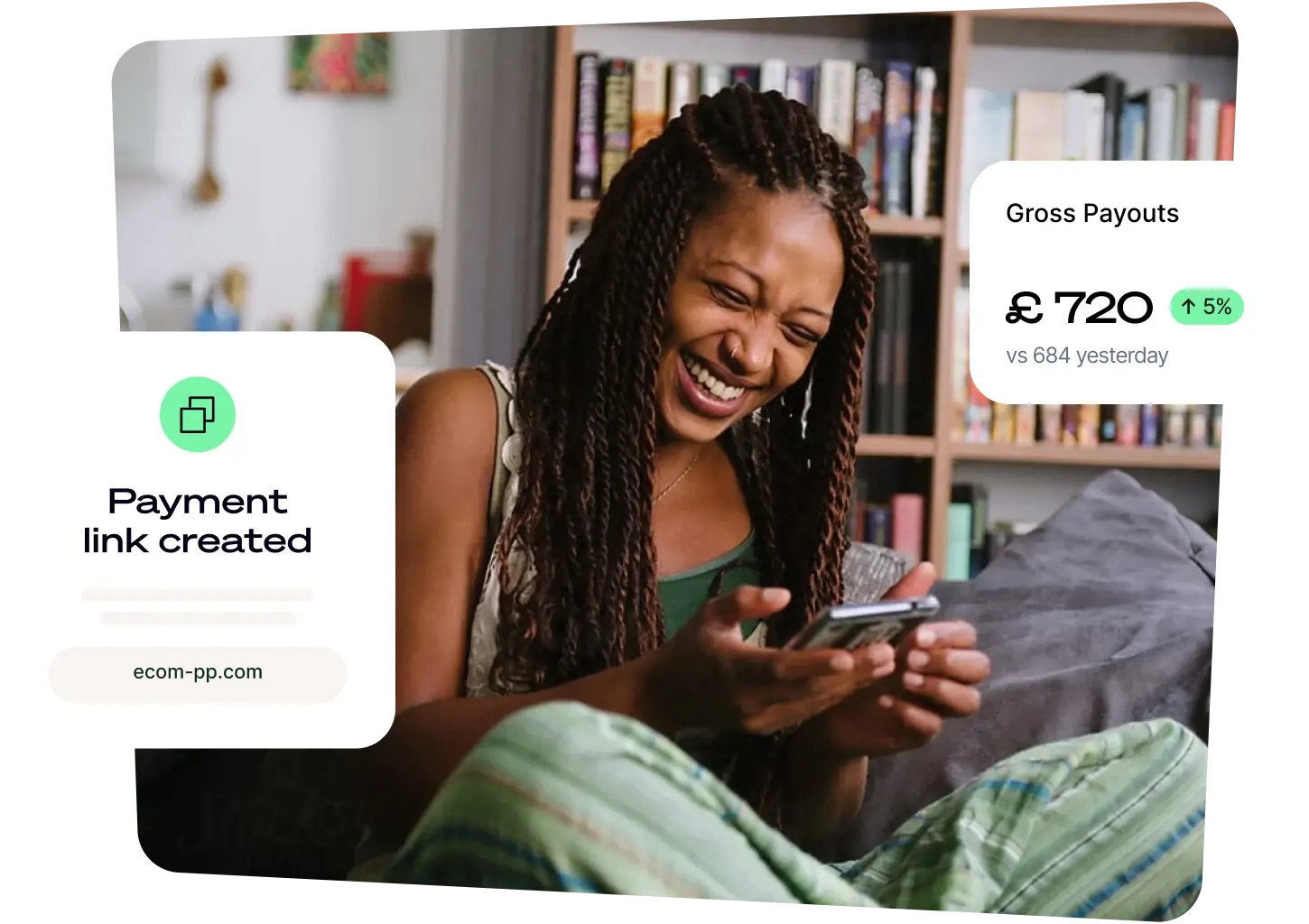
Offer your customers the way they want to pay
Finding the right way to accept payments is one of those tasks that sounds simple on paper, but it can quickly become a headache when you're trying to grow a business.
If you’ve been trading for a while, as your business scales, you’ve likely noticed that the way your customers want to pay is just as important as what they are buying.
In the UK, the way people spend money is changing faster than ever. Over half of UK adults (57%) now regularly use mobile wallets like Apple Pay or Google Pay to pay for things, while cash usage continues to fall. For small businesses and micro-enterprises, keeping tabs on payment trends ensures that you aren't accidentally turning customers away.
Why customers abandon purchases at the last minute
Cart abandonment is a common problem. After adding their product to their basket and making their way through the checkout, they suddenly drop off at the final stage.
While limited or expensive delivery options and other fees are often blamed, the payment experience is also a major factor.
Research shows that 70% of shoppers say being able to pay using their preferred payment method is an important factor when choosing where they shop. Additionally, 45% stated they would go elsewhere if their payment method wasn't offered.
If you’re only offering card payments, a customer has to find their physical wallet to type in 16 digits. By giving them no choice but to do this, you’re adding unnecessary friction, which could be the deciding factor in a customer making a purchase.
Security is another major factor when customers are entering payment details. For smaller businesses, the easiest way to stay safe is to use a hosted payment page. This means the actual payment happens on a secure, third-party server that handles the heavy lifting of PCI DSS compliance for you. It protects your brand's reputation and ensures your customers' data is kept under the highest global security standards from day one.
By focusing on making the payment part of the journey as easy as possible, you aren't just taking money - you're building the kind of trust and convenience that keeps customers coming back.
Choosing the right payment methods for your customers
You might think that the more payment methods you offer, the better. But the trick isn't to integrate every payment method on earth into your payment page; instead, offer the ones that solve your specific business challenges.

How do you know when to scale your payments infrastructure?
As you grow from a micro-enterprise to a larger small business, your payment needs will shift. Here is a simple way to know when it’s time to add new methods:
Offer your customers the right mix of payment methods with Ecommpay
Choosing the right partner to handle these complexities is what turns payments from a backend chore into a strategic advantage.
Whether you need to send instant payment links to settle invoices faster, integrate Apple Pay and Google Pay to capture mobile shoppers, or set up recurring subscriptions for predictable revenue, our platform scales alongside you.
Ultimately, the goal is simple: offer your customers the way they want to pay, and the growth will follow. Don’t let a clunky checkout hold your business back. Switch to a transparent, flexible solution that keeps your cash flow healthy and your customers coming back for more.